SVOD, AVOD or Broadcast? Choosing the Right Distribution Path for Your Film
SVOD vs AVOD vs broadcast
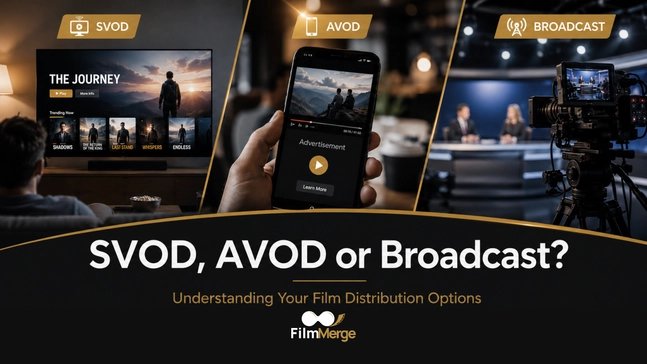
The strongest distribution strategy begins with fit: the audience you want to reach, the rights you can grant, the release window you can support and the commercial outcome you are pursuing.
A recognised platform name can be attractive, but visibility alone does not make a distribution decision sound. Subscription streaming, ad-supported streaming and television broadcast each create a different relationship between the film, the audience and the rights holder. A title may be suitable for more than one route, yet the order, territory and rights package can determine whether those routes complement or obstruct one another.
For Christian and family-friendly films, audience trust matters as much as technical availability. The practical question is not simply, “Where can this film appear?” It is, “Where is the intended audience most likely to discover it, understand its value and watch it under workable commercial terms?”
Start with four decisions
- Audience: Who is most likely to watch, recommend or programme the film?
- Rights: Which media, territories, languages and windows are genuinely available?
- Objective: Is the priority a licence fee, audience growth, long-term availability, community impact or a combination?
- Readiness: Are the master, captions, metadata, artwork and rights records suitable for the intended destination?
SVOD: curated access through subscription
Subscription video on demand gives viewers access to a catalogue through a recurring subscription. For filmmakers, the attraction can be a curated viewing environment, established audience trust and a clearer association with a recognised service or specialist content proposition.
The economics are determined by the agreement, not by the label “SVOD.” A licence may involve a fixed fee, a performance component, a revenue share or a negotiated combination. Exclusivity, territory and licence duration can be as important as the headline payment because they determine what the rights holder may pursue elsewhere.
Ask before agreeing: Which rights are exclusive? For how long? In which territories and languages? What reporting is provided? What happens when the licence ends?
SVOD can be a strong fit for a well-positioned film with a clearly identifiable audience, strong artwork, dependable delivery materials and a release strategy that benefits from curated placement. It may be less attractive when a broad or lengthy exclusive grant would prevent better opportunities in other markets.
AVOD: broad access supported by advertising
Ad-supported video on demand removes the subscription barrier for the viewer. That can make a film easier to sample and share, particularly for outreach-led titles, catalogue films and projects whose audiences are spread across several territories.
AVOD revenue usually depends on monetised viewing and the terms of the platform or distributor. Audience size, watch time, advertising demand, territory, deductions and promotional support can all affect performance. Availability is therefore not the same as discoverability, and discoverability is not the same as meaningful revenue.
AVOD works best when the film has a definable audience and the rights holder supports discovery with a credible trailer, strong key art, accurate metadata and sustained promotion. It should not be treated as a passive “upload and earn” model.
Broadcast: scheduled reach within a defined market
Broadcast licensing places a film within a scheduled television service. It can be particularly valuable when a broadcaster already serves a trusted national, regional, language or faith-oriented audience. Scheduling can also create an event around a premiere, season or community theme.
A broadcast agreement should define territory, number of transmissions, catch-up rights, promotional use, language versions, technical delivery and the licence period. Broadcast and streaming can coexist within one strategy, but only when the rights and windows have been divided clearly.
Compare the routes
| Route | Viewer access | Commercial focus | Key risk to manage |
| SVOD | Paid subscription | Negotiated licence or agreed performance structure | Exclusivity or rights window may restrict other opportunities |
| AVOD | Free, advertising-supported viewing | Value depends heavily on monetised performance | A title can be available but difficult to discover |
| Broadcast | Scheduled television service | Defined licence, territory and transmission window | Catch-up and ancillary rights can be broader than expected |
Build a sequence, not a collection of disconnected deals
A professional strategy considers timing as well as destination. One film might begin with a limited broadcast window, move into subscription availability and later enter an ad-supported catalogue. Another may launch non-exclusively in selected territories while preserving rights for a specialist broadcaster or community screening programme.
Before accepting any route, map the rights already committed and the rights that remain. Include media, territory, language, exclusivity, term, holdbacks, promotional use and delivery obligations. This prevents a promising opportunity from colliding with an earlier agreement.
Where FilmMerge fits
FilmMerge works with filmmakers, streaming platforms, broadcasters and professional content buyers across distribution and licensing pathways. Film review, onboarding, licensing, technical delivery and destination acceptance are separate stages. Actual placement depends on title fit, available rights, territory, technical readiness, buyer demand and the terms agreed for the production.
That distinction is important. A professional distribution partner should help a filmmaker understand the route being considered without presenting every submission as a guaranteed placement. The value lies in disciplined preparation, informed positioning and properly documented commercial conversations.
Preparing a Christian or family-friendly film for distribution? Submit your title to FilmMerge with accurate rights information, a secure screener and a clear audience proposition.